BARD EAST/WEST ENSEMBLE WITH SPECIAL GUEST WU MAN - Bard
- László Z. Bitó Conservatory Building Bard College Annandale-on-Hudson, NY, 12504 United States (map)
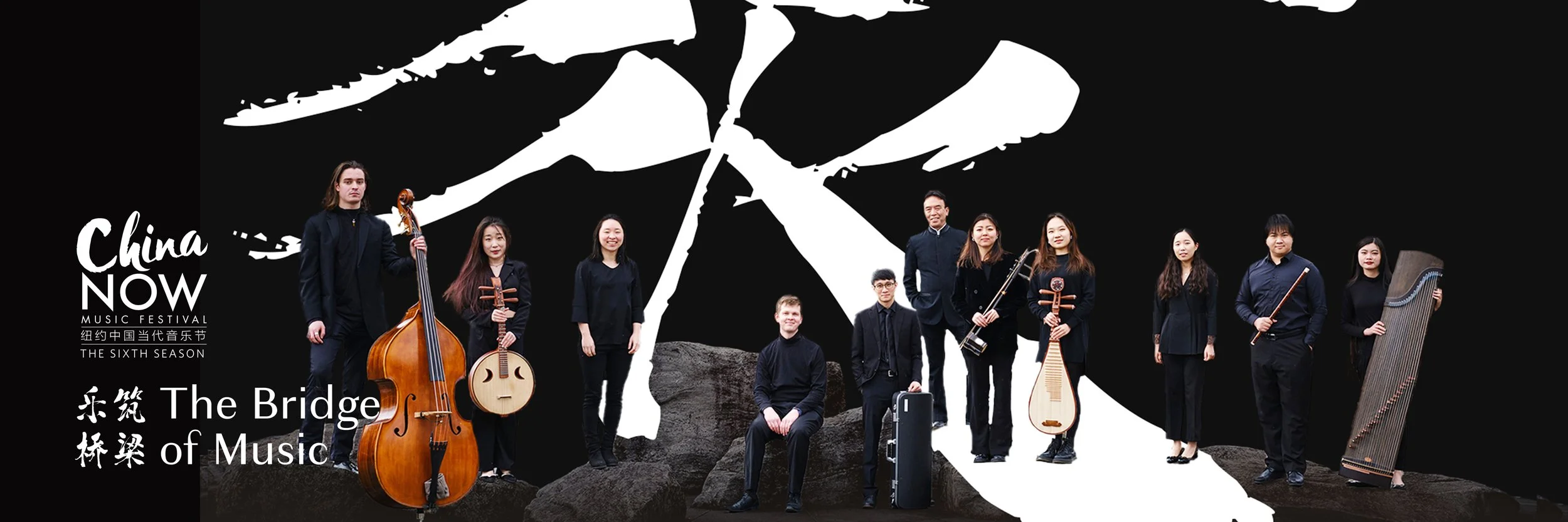
The opening concert of the sixth annual China Now Music Festival features the NY debut of the Bard East/West Ensemble, an innovative music group combining Chinese and Western instruments to create a new model of cross-cultural performance.

Wu Man, pipa virtuoso
The program features new arrangements of music by Tan Dun and Zhou Long, as well as several new works by outstanding young composers from China, including members of the legendary faculty of the Central Conservatory of Music.
Internationally renowned pipa virtuoso Wu Man will join the ensemble to perform a new arrangement of Zhou Long’s popular pipa concerto, ‘King Chu Doff’s His Armor’.
Full program details below.
PROGRAM
East/West Crossings
Tian Tian 田田
Temple Drums 社鼓
Shamanic Sacrificial Dance - Drum Ceremony - Wine Songs and Blessings
Huang Wen 黄文
An Ode to Farewell 别赋
Bryan Zhe Wang, guqin
Yao Chen 姚晨
Land of the Young 不辞青春 for mixed large ensemble
Jiang Ying 姜莹
Silk Road 丝绸之路
arr. Xinyan Li
Tan Dun 谭盾 (b. 1957)
Northwest Suite 西北组曲
I. Heavenly God Bestows Rain 老天爷下甘雨
II. Wedding Chamber Pranks 闹洞房
IV. Stone Slab Waist Drums 石板腰鼓
arr. Xinyan Li
Zhou Long 周龙 (b. 1953)
King Chu Doffs his Armor 霸王卸甲 for pipa and mixed ensemble
Wu Man, pipa
about the PERFORMERS
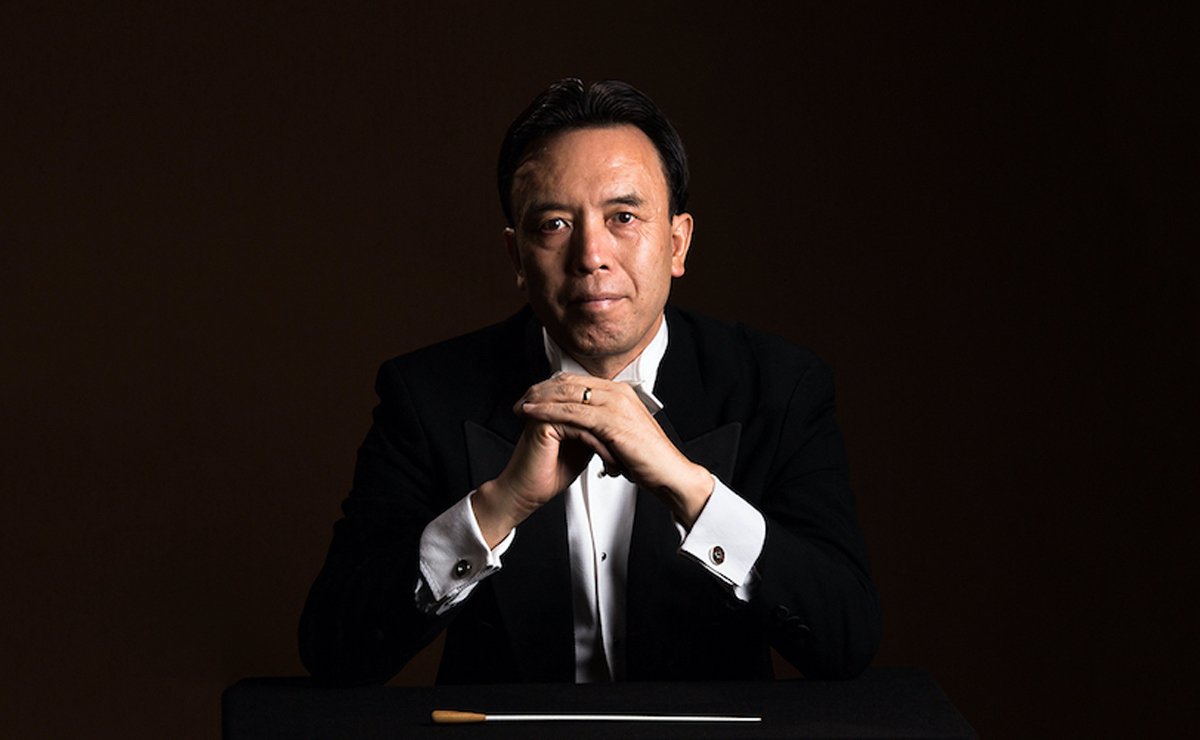
Conductor Jindong Cai is the director of the US-China Music Institute, professor of music and arts at Bard College, and associate conductor of Bard’s The Orchestra Now. Before coming to Bard, Cai was a professor of performance at Stanford University. Over the 30 years of his career in the United States, Cai has established himself as an active and dynamic conductor, scholar of Western classical music in China, and leading advocate of music from across Asia. At Bard, Cai founded the annual China Now Music Festival. In its first three seasons, China Now presented new works by some of the most important Chinese composers of our time, with major concerts performed by The Orchestra Now at Bard’s Fisher Center for the Performing Arts, Lincoln Center, Carnegie Hall, and Stanford University. In 2019, the festival premiered a major new work by Pulitzer Prize–winning composer Zhou Long, Men of Iron and the Golden Spike—a symphonic oratorio, in commemoration of the Chinese railroad workers of North America on the 150th anniversary of the completion of the Transcontinental Railroad. Together with his wife Sheila Melvin, Cai has coauthored many articles on the performing arts in China and the book Rhapsody in Red: How Western Classical Music Became Chinese. Their latest book, Beethoven in China: How the Great Composer Became an Icon in the People’s Republic, was published by Penguin in September 2015.

Recognized as the world’s premier pipa virtuoso, Wu Man is a soloist, educator and composer who gives her lute-like instrument—which has a history of more than 2,000 years in China—a new role in both traditional and contemporary music. Wu Man has premiered hundreds of new works for the pipa, while spearheading multimedia projects to both preserve and create global awareness of China’s ancient musical traditions. Projects she has initiated have resulted in the pipa finding a place in new solo and quartet works, concertos, opera, chamber, electronic, and jazz music as well as in theater productions, film, dance, and collaborations with visual artists. She has performed in recital and with major orchestras around the world, is a frequent collaborator with ensembles such as the Kronos Quartet and Shanghai Quartets and The Knights, and is a founding member of the Silkroad Ensemble. Wu Man has appeared in more than 40 recordings throughout her career, including seven Nominee Awards and the Silkroad Ensemble’s Grammy Award-winning recording Sing Me Home, featuring her own composition. She is also a featured artist in the 2015 documentary The Music of Strangers: Yo-Yo Ma and the Silk Road Ensemble.
Born in Hangzhou, China, Wu Man studied at the Central Conservatory of Music in Beijing, where she became the first recipient of a master's degree in pipa. At age 13, she was hailed as a child prodigy and became a nationally recognized role model for young pipa players. She subsequently received first prize in the First National Music Performance Competition, among other awards, and participated in many premieres of works by Chinese composers. She moved to the U.S. in 1990 and was awarded the Bunting Fellowship at Harvard University in 1998. Wu Man was the first Chinese traditional musician to receive the United States Artist Fellowship (2008) and the first artist from China to perform at the White House. In 2013, she was named Musical America’s Instrumentalist of the Year. She is a distinguished Professor at both the Zhejiang and the Xi'an Conservatory, China, as well as a visiting faculty member of the Bard College Conservatory of Music’s US-China Music Institute. wumanpipa.org
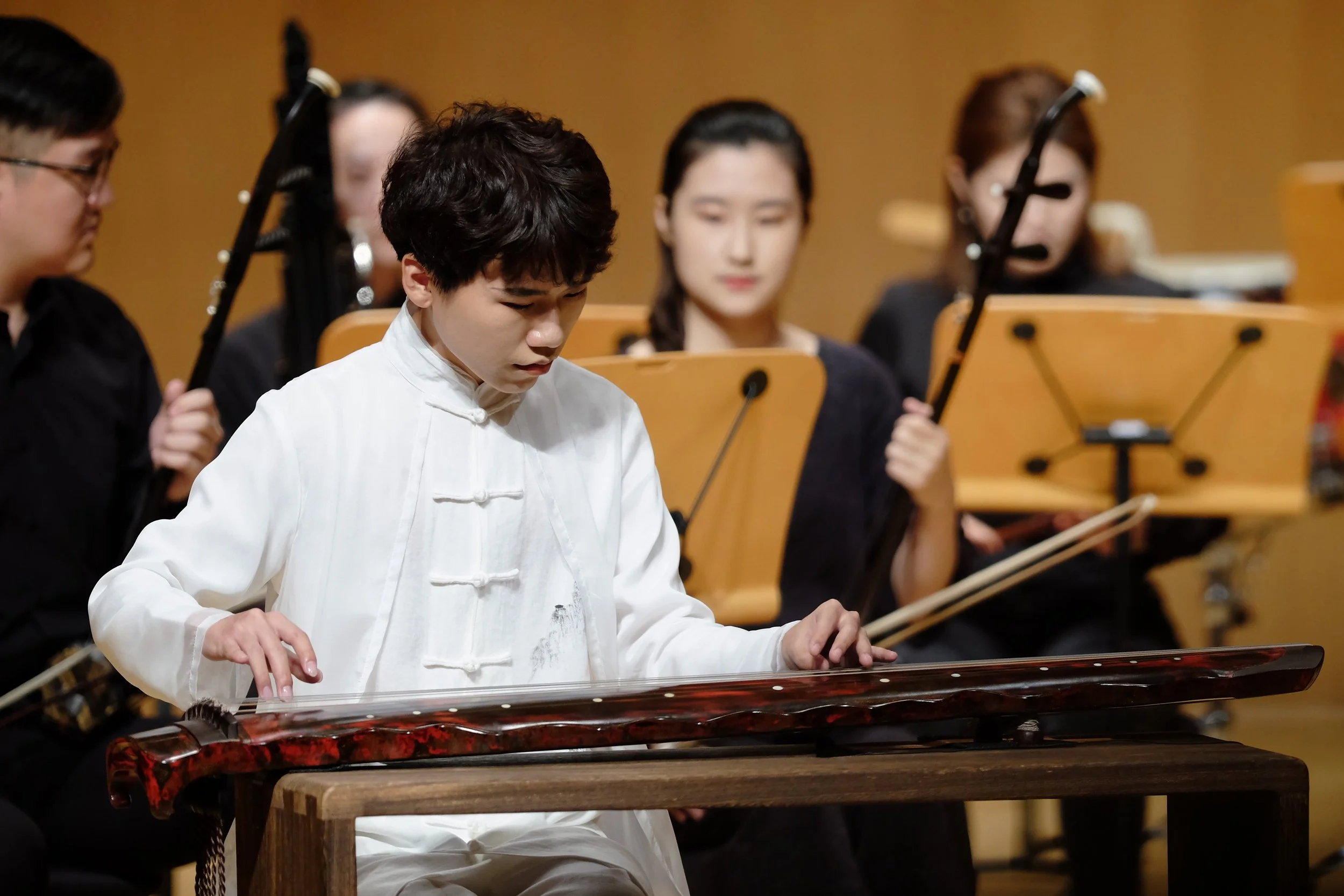
Bryan Zhe Wang is one of the first candidates in Bard Conservatory’s Master of Arts in Chinese Music and Culture, where he studies with the guqin virtuoso Professor Zhao Jiazhen of the Central Conservatory in Beijing.
In the 2021 Singapore International Guqin Invitational Tournament, he ranked first in both the Traditional and the Non-Traditional category. In 2022, he won the Bard Conservatory Concerto Competition with a performance of "A Fall Picture of Wild Geese in Cattail and Hibiscus" by Li Yuejin (b. 1995).
Bryan’s educational background straddles language and music. He holds a Bachelor’s degree in English Literature and Linguistics and a Master’s degree in Translation and Interpreting from Beijing Foreign Studies University. His intercultural mindset and academic literacy gained in his previous studies facilitate his research in Chinese music in the US. In the future, he plans to expand his studies to a Ph.D. in ethnomusicology.
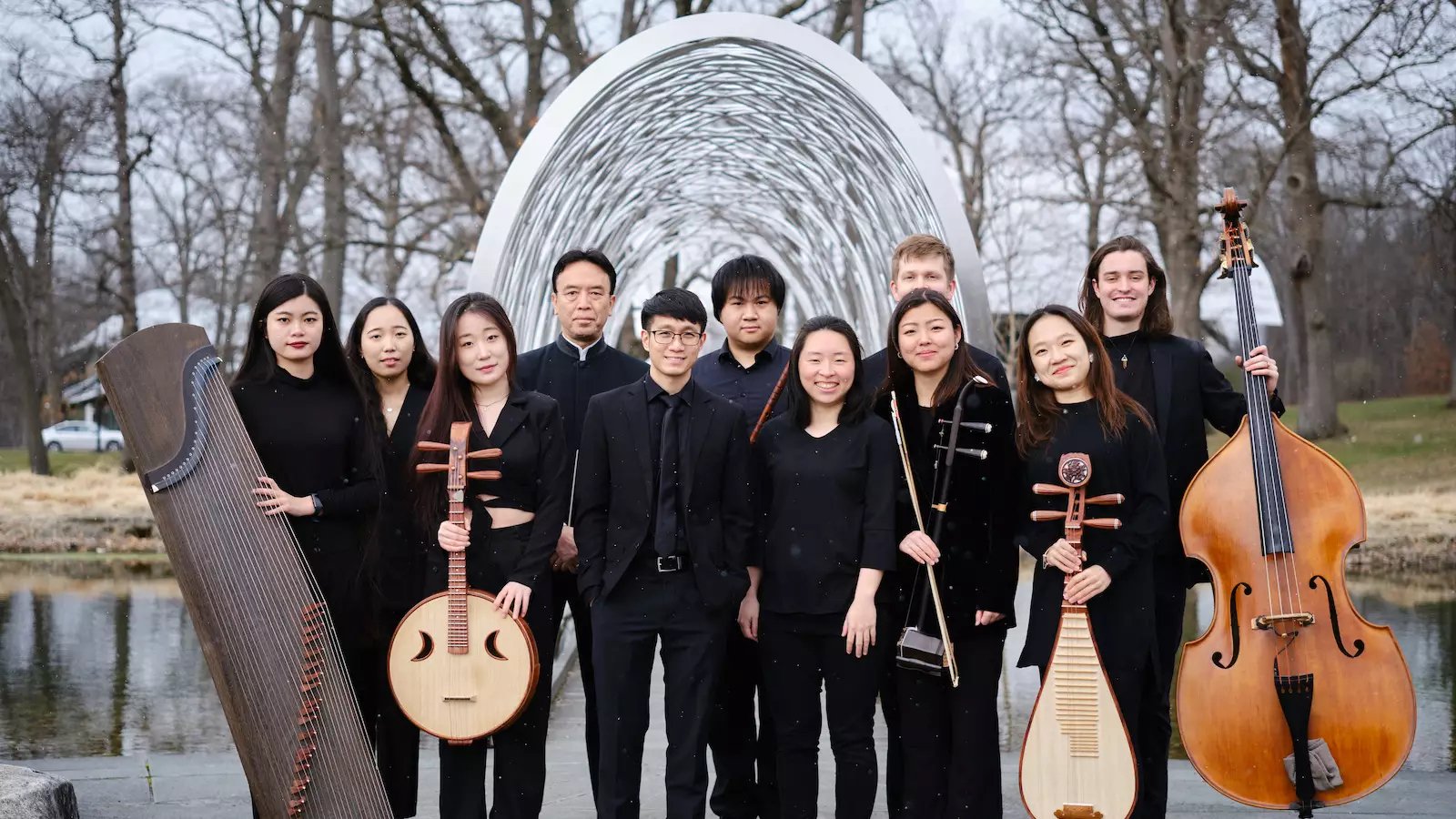
The Bard East/West Ensemble aims to combine the instrumentation and musical traditions of the East and the West, to bring together Chinese music and Western music, and to seek a new model of cross-cultural music cooperation. Under the direction of Jindong Cai, the ensemble is comprised of young musicians from the Bard Conservatory of Music and invites accomplished artists to collaborate as guest soloists. The Bard East/West Ensemble is dedicated to playing works with unique instrumental creations and arrangements, thus creating a new way of musical expression.
about the COMPOSERS
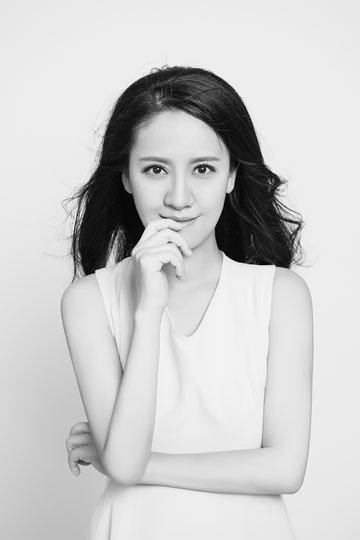
Jiang Ying is a contemporary Chinese composer and musician dedicated to exploring and innovating in the field of ethnic music. She began learning the pipa at the age of 7 and started studying composition at 16. In 2010, she graduated from the Shanghai Conservatory of Music, earning a master's degree in composition. That same year, she joined the Shanghai National Music Group as a resident composer. In 2013, she moved to the Central National Music Group, also as a resident composer.
Some of her major works include the ethnic orchestral piece "The Silk Road," the ethnic music dramas "Impression of Chinese Music" and "Encounter with Chinese Music," and the ethnic instrumental drama "Xuanzang's Journey to the West." Jiang Ying's compositions have won numerous awards in domestic and international competitions, including the top prize, the Wenhua Award, at the 18th National Music Composition Competition held by the Chinese government. She has also received the "New Yi Cup" Gold Award for Young Composers of Ethnic Orchestral Music organized by the Ministry of Culture's Art Department and the Chinese Society of Ethnic Orchestral Music, as well as the Young Composer Award from the Ministry of Culture of China.

Huang, Wen is a dynamic and prolific composer and pianist from China. She graduated from the Composition Department of the Central Conservatory of Music and studied under Prof. Xiaogang Ye, who is the Chairman of the Chinese Musicians' Association and the Dean of the Music School at The Chinese University of Hong Kong, Shenzhen.
Wen has received various composition awards for her works, including the Silver Prize at the 4th Hong Kong China Music Piano Works Competition, the Top Prize at the 2nd China-ASEAN Music Festival Composition Competition, and Silver Prize and Best Work Award from the "Qintai·Dunhuang Cup” Chinese Guqin Art New Works Competition, and she was also the winner of the U.S. Golden Key Composition Competition.
Wen's compositions span a wide range of musical genres and has been involved in creating music for major music festivals, piano performances, film and televisions, and she has collaborated with orchestras such as: The China National Center for the Performing Arts Orchestra, China National Symphony Orchestra, China Philharmonic Orchestra, Changsha Symphony Orchestra, The Hubei Provincial Song and Dance Theatre Ethnic Orchestra, and more.
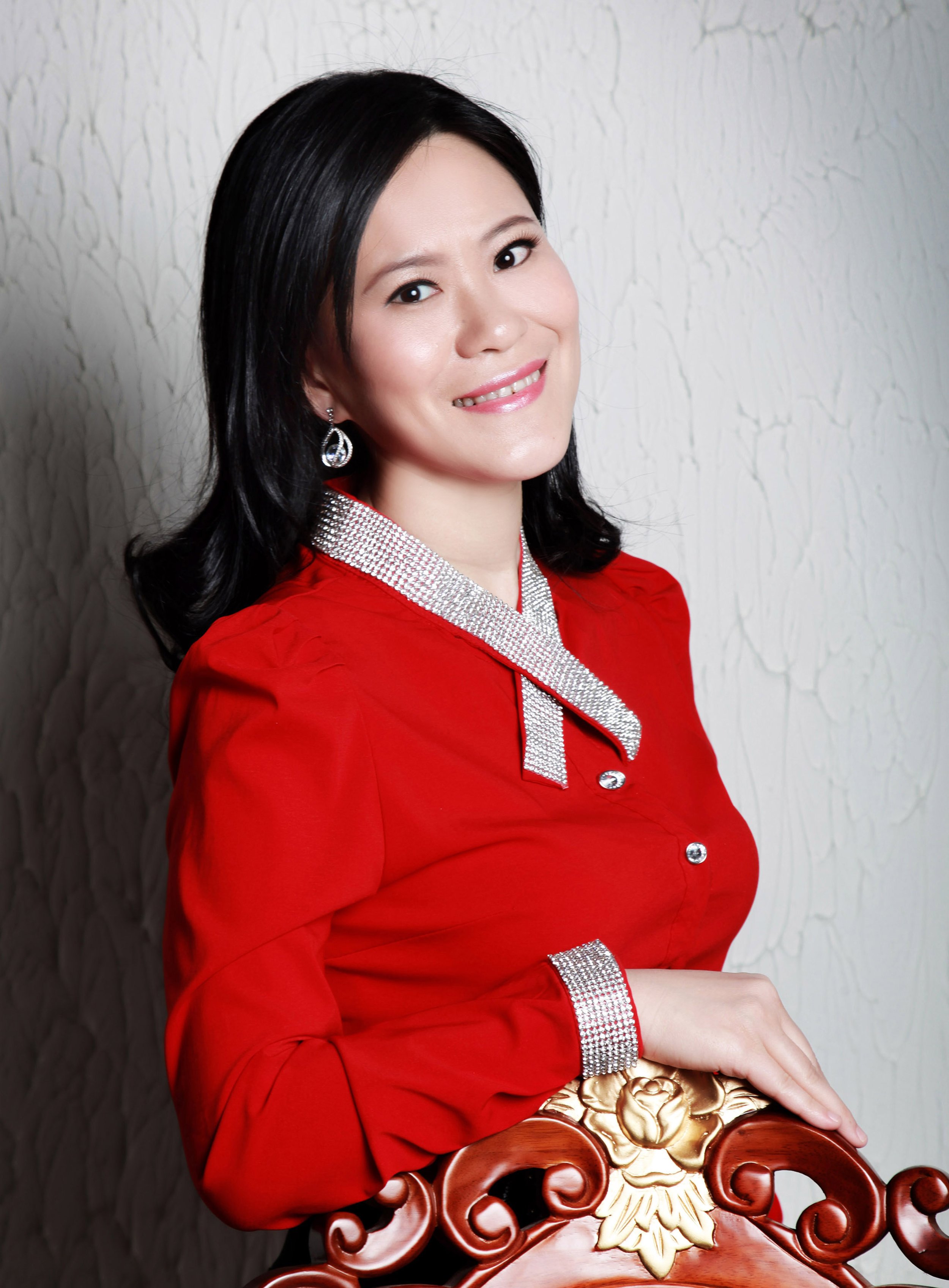
A visiting professor of music at US-China Music Institute at Bard College Conservatory of Music, Dr. Li’s music works have been featured at Aspen Music Festival, Carnegie Hall, National Opera Center, Composers Now Festival, Music Mountain Festival, Beijing International Chamber Music Festival, Thailand International Composition Festival, Nordic International Bassoon Symposium, IDRS Annual Conference, and China’s National Center for the Performing Arts.
Rooted in Chinese music and culture, she is specialized in composing for mixed ensembles of Chinese and Western instruments. Her works include a guzheng concerto, a duet for Beijing Opera’s qingyi and xiao, a concerto for Beijing Opera’s hualian and chamber orchestra, a septet for guqin, guanzi and five western instruments, a trio for flute, pipa and cello, and a quartet for flute, pipa, erhu and percussion etc.
As a native Chinese, Dr. Li has conducted field research on folk songs, folk chorus and ethnic instrumental music in villages of various minorities such as Dong, Miao, Yi and Zhuang in southwest China, as well as Mongolia and Dawoer in northeast China. At Bard Conservatory, she has taught Chinese Music Style Composition Workshop and Chinese music course series including Chinese Instrumental Music, Chinese Folk Music, and Chinese Operas. Dr. Xinyan Li received her doctoral degree in composition at University of Missouri-Kansas City Conservatory of Music and Dance. She earned her bachelor’s and master’s degrees at China Conservatory of Music in composition and music theory.
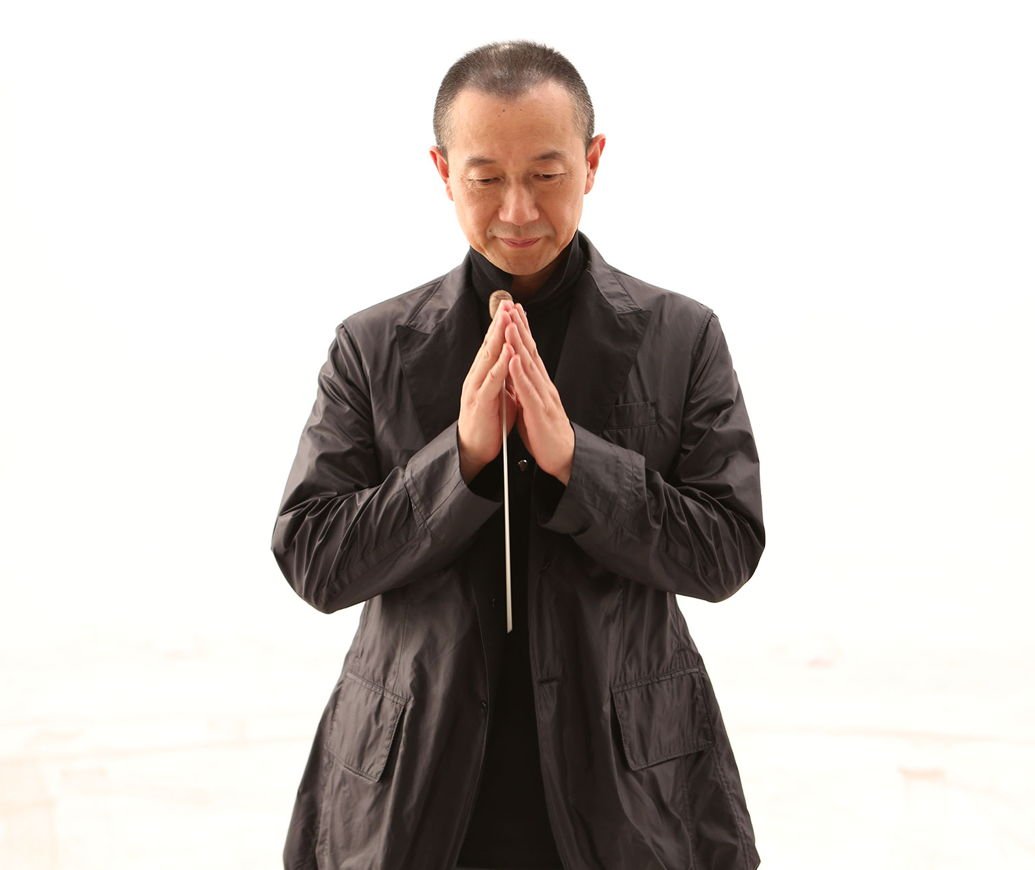
The world-renowned artist and UNESCO Global Goodwill Ambassador Tan Dun, has made an indelible mark on the world’s music scene with a creative repertoire that spans the boundaries of classical music, multimedia performance, and Eastern and Western traditions. A winner of today’s most prestigious honors including the Grammy Award, Oscar/Academy Award, Grawemeyer Award, Bach Prize, Shostakovich Award, and most recently Italy’s Golden Lion Award for Lifetime Achievement, Tan Dun’s music has been played throughout the world by leading orchestras, opera houses, international festivals, and on radio and television. Most recently, Tan Dun was named as Dean of the Bard College Conservatory of Music. As dean, Tan Dun will further demonstrate music’s extraordinary ability to transform lives and guide the Conservatory in fulfilling its mission of understanding music’s connection to history, art, culture, and society. Learn More
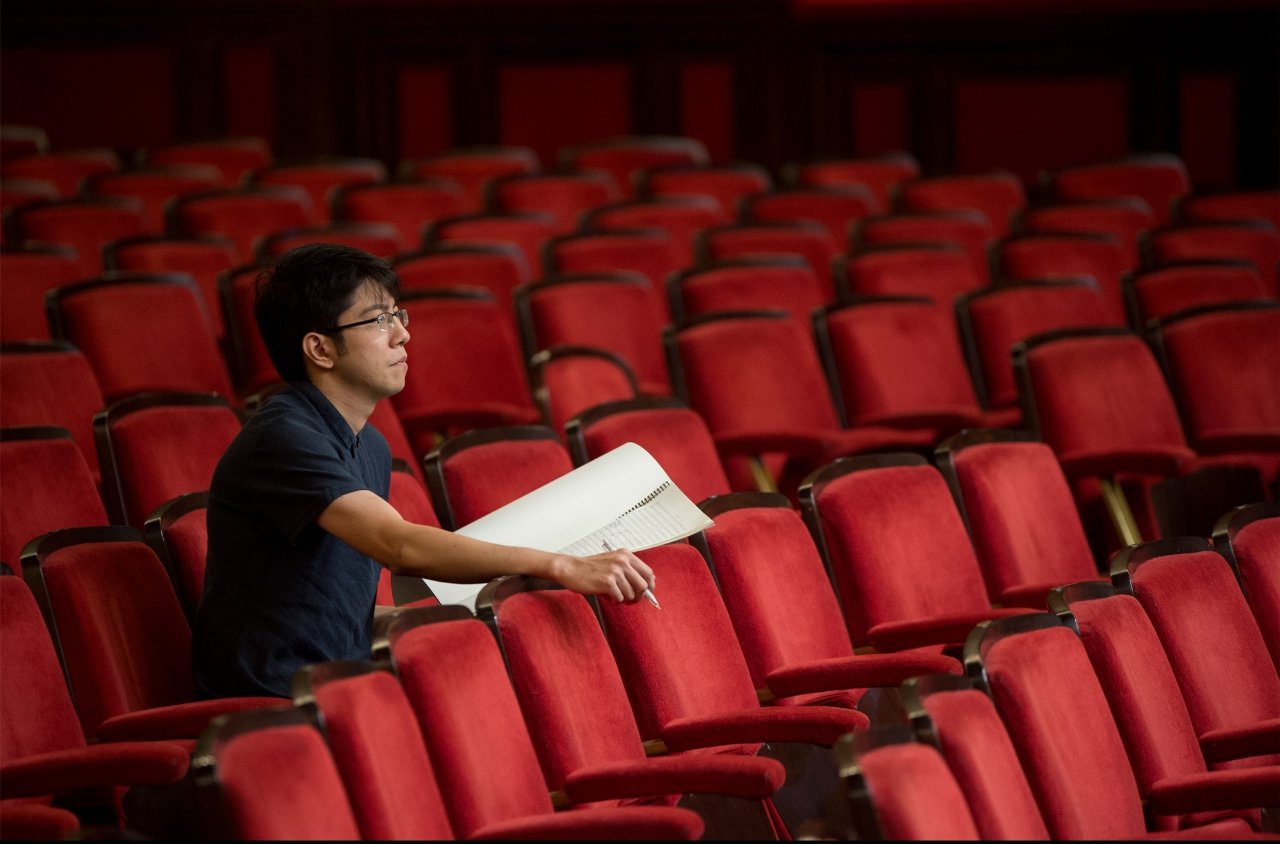
Tian Tian studied music with his father since he was a child, and graduated from the doctoral class of Professor Qin Wenchen, a famous composer, in 2017, majoring in the Department of Composition of the Central Conservatory of Music during the time as an undergraduate and postgraduate student. After graduation, he was qualified to teach in his school with excellent academic performance in the same year. And now, he is a young teacher in the Department of Composition of the Central Conservatory of Music.
His music creation includes orchestral music, symphonic poetry, chamber music, chamber opera, dance and other forms, with a wide and varied range of themes, which have been played in China and abroad, and caused the industry's strong repercussion. His main works include Concerto for Orchestra and Night Chant of Epiphyllum in Autumn of orchestral music, Ring on August and Dedication to the Journey of symphonic poem, Triple Prism of chamber opera, Monologue in Snowy Night, Green Lantern and Dream Shadow and Yan'an Capriccio of chamber music, and more.
In addition, his work, Concerto for Orchestra, won the George Enescu Symphony Competition in Romania after a rigorous selection by a jury composed of seven top European composers in September 2016. In May 2013, the symphony poem Ring on August won the championship at the Beijing Modern Music Festival Symphony Grand Prix and the fourth Young Composers Program.

Yao Chen’s music, always ritual in nature, eschews contemporary vogues and instead aims at a timelessness and an otherness that exists beyond the standard categories – music for the moment, but also music for then and music for what lies ahead. Whether his work is brittle or forceful, or often both in coexistence, melancholy and a sense of wonder are recurring characteristics, as is an internationalist orientation grounded in a quest for maximal musical meaning. His perceptions on musical time, timbre, intonation, pulsation, and expression are always at frontiers: between the old and the new, between the East and the West, between irrational mysticism and rational logic. These perceptions have imbued in his many works such as From the Vessel of Ancient Souls, Garden: Unearthing the Way Home, Pipa Plays Opera, The Supplicant, Emanations of Tara, Yearning, and others.
He is professor of Composition at Central Conservatory of Music in Beijing. In the past, he has hold lectureships at the University of Chicago Music Department; professorships at the University of Illinois at Urbana-Champaign School of Music, the Illinois State University School of Music, and the Soochow University School of Music in China. YAO is his surname, and Chen is his first name.
The 2023 China Now Music Festival is presented by the US-China Music Institute in collaboration with the Central Conservatory of Music, China.

