1
2
3
4
5
6
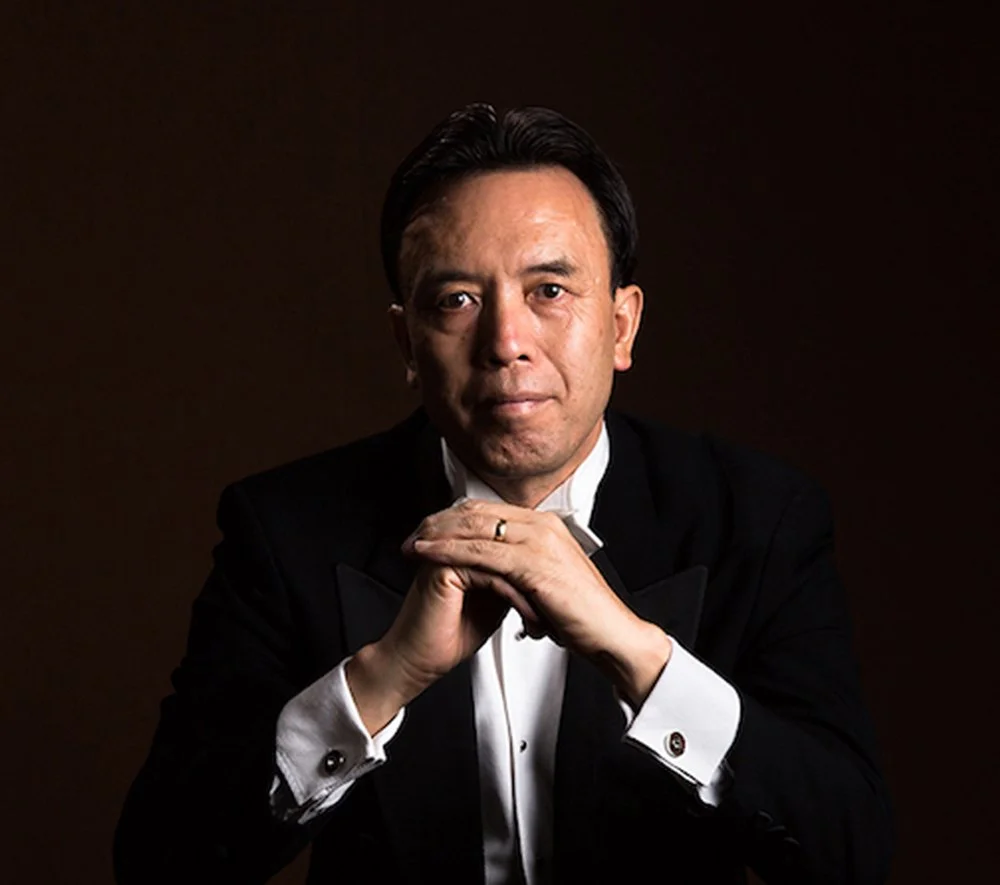
Jindong Cai 蔡金冬, artistic director and conductor
Jindong Cai is director of the US-China Music Institute, professor of music and arts at Bard College, and associate conductor of The Orchestra Now (TŌN). Previously, he was a professor of performance at Stanford University. Born in Beijing, Cai received his early musical training in China, where he learned to play violin and piano. He came to the United States for his graduate studies at the New England Conservatory and the College-Conservatory of Music in Cincinnati. Cai started his conducting career with the Cincinnati Symphony Orchestra, and has worked with orchestras throughout North America and Asia. He is a three-time recipient of the ASCAP Award for Adventurous Programming for Contemporary Music.
Over his 35-year career in the United States, Cai has established himself as an active and dynamic conductor, scholar of Western classical music in China, and leading advocate of music from across Asia. At Bard, Cai founded the annual China Now Music Festival, which has become a major platform in the West for new works by some of the most important Chinese composers of our time.
With his wife, Sheila Melvin, Cai has coauthored many articles on the performing arts in China, as well as two books, Rhapsody in Red: How Western Classical Music Became Chinese and Beethoven in China: How the Great Composer Became an Icon in the People’s Republic.
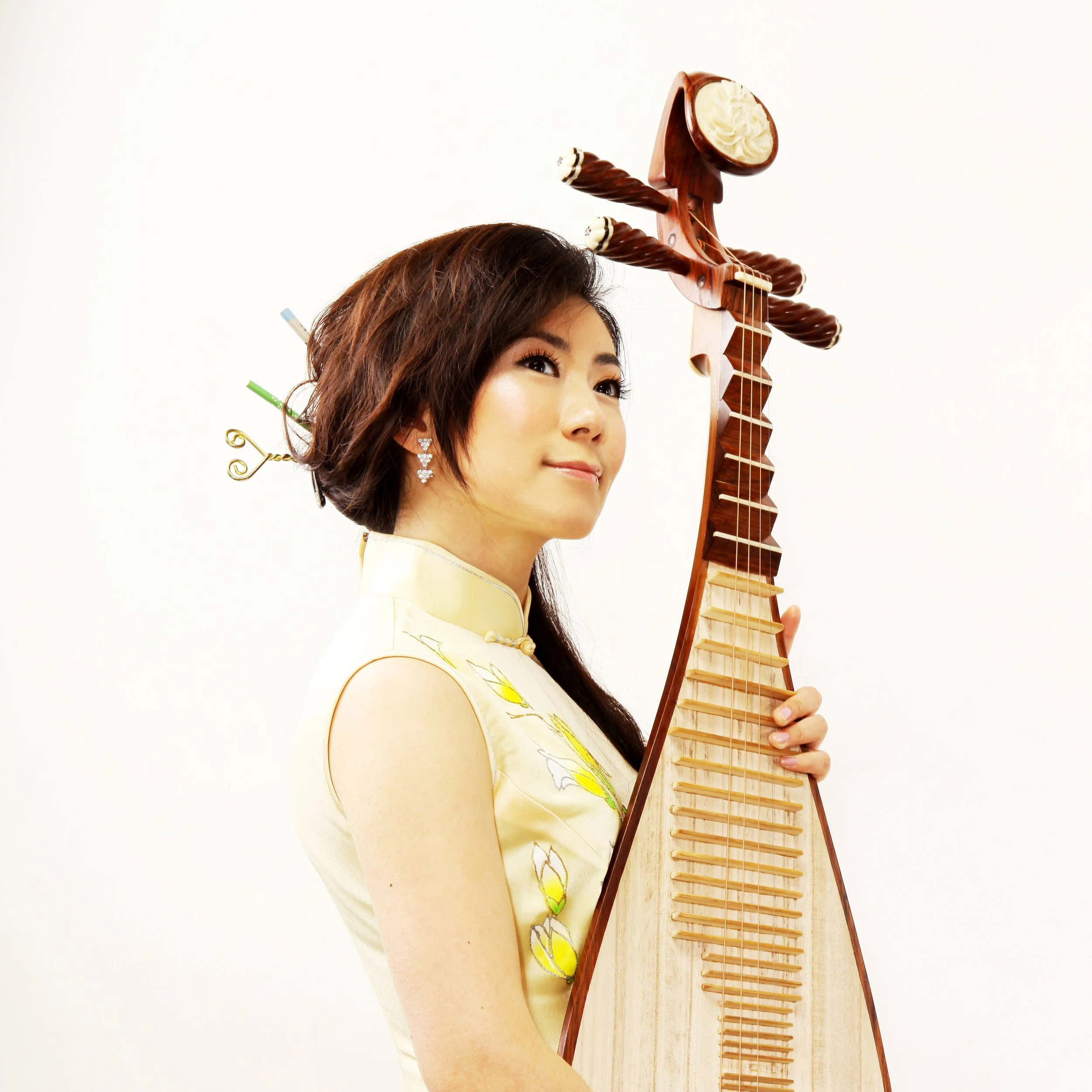
Yang Jin 杨瑾, pipa
Hailed as one of the most energetic, passionate, and respected pipa masters, Yang Jin graduated from the renowned Central Conservatory of Music in Beijing and subsequently taught at the Wuhan Conservatory of Music. Yang has won many awards. In 2004, she earned the prestigious Golden Bell Award for Music in China and she won a Silver Award at the Global Music Awards. Jin collaborates with Yo-Yo Ma's Silk Road Ensemble and has performed at esteemed venues such as Carnegie Hall, Lincoln Center, the Kennedy Center, and Harris Theater. She is an instructor at the University of Delaware’s Master Players Concert & Festival and serves as a judge for the Hummingbird International Music Competition at the Eastman School of Music.
Yang Jin has performed as a soloist with many prominent orchestras, including the Hong Kong Chinese Orchestra, Macao Chinese Orchestra, Shanghai Symphony Orchestra, Japan's Royal City Orchestra, the Chinese Orchestra of the Central Conservatory of Music, the Oriental Chinese Orchestra and The Chamber Orchestra of Pittsburgh. She was also the featured pipa performer at the 2020 Tucson Winter Chamber Music Festival for the World Premiere of Quintet: Four Inscapes, composed by Ross Edwards. Since 2013, Yang Jin has led various crossover ensembles, including the Pittsburgh Purple Bamboo Music Ensemble, the Helio Phoenix Trio, HarmoniZing, Afro Yaqui Music Collective, J4, and the Summer Breeze Jazz Ensemble.
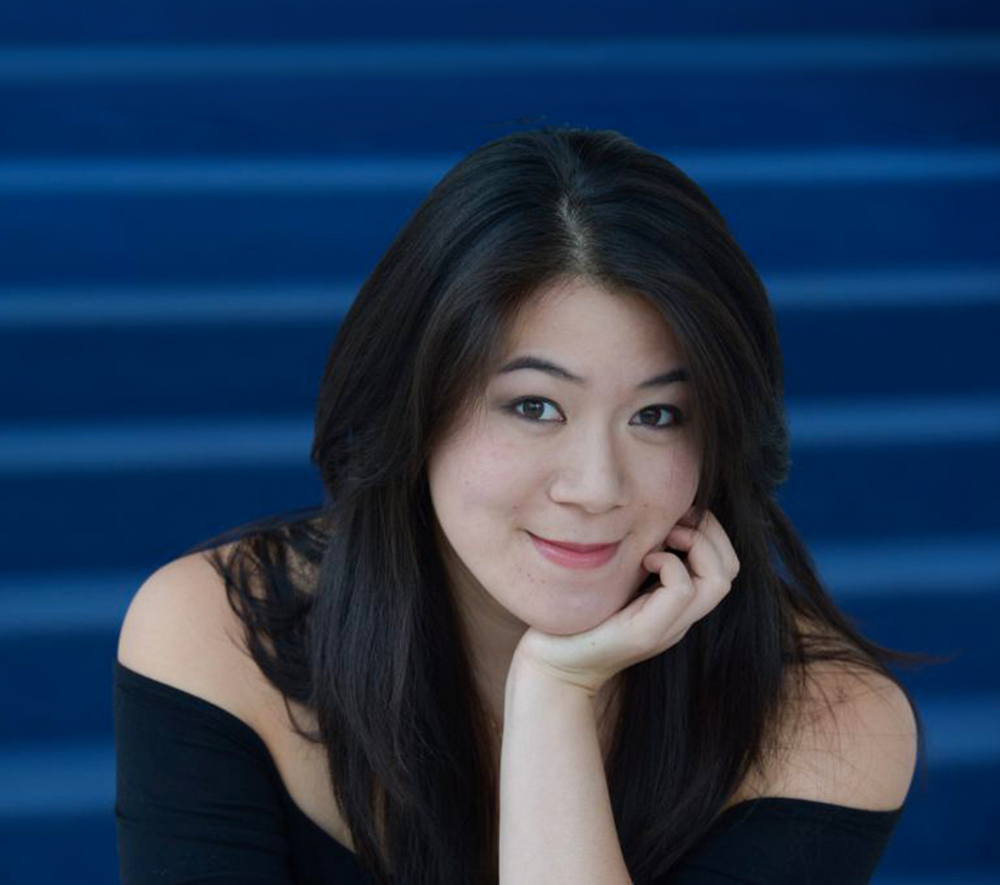
Karen Vuong, soprano
American soprano Karen Vuong is recognized for her expressive artistry and versatility across both standard and contemporary repertoire. Recent engagements include Cio-Cio-San in Puccini’s Madama Butterfly with Opera Grand Rapids in a new production directed by Mo Zhou, Diane Tran in Huang Ruo’s Bound with Anchorage Opera, the title role in Dvořák’s Rusalka with Portland Opera, Mimì in La bohème with Seattle Opera, and Gänsemagd in Humperdinck’s Königskinder at the Tiroler Festspiele Erl. Additional career highlights include Tina in the film production of Flight with Seattle Opera, Suzel in L’amico Fritz at the Tiroler Festspiele Erl, Maya Lin in the world premiere of Huang’s THE RIFT: Opera in One Act at Washington National Opera, the Countess in Le nozze di Figaro, Donna Elvira in Don Giovanni, and Gretel in Hänsel und Gretel.
From 2013 to 2019, Vuong was a member of the ensemble at Oper Frankfurt, where she performed a wide range of leading and supporting roles. She was also an inaugural member of LA Opera’s Domingo-Colburn-Stein Young Artist Program and studied at the Juilliard School, where she received the Novick Career Advancement Grant.
Additional career highlights include Tina in the film production of Flight with Seattle Opera, Suzel in L'amico Fritz at the Tiroler Festspiele, Maya Lin in the world premiere of Huang Ruo's The Rift at Washington National Opera, the Countess in Le nozze di Figaro, Donna Elvira in Don Giovanni, Gretel in Hänsel und Gretel, Agata in Fioravanti's La cantatrici villane, Suor Genovieffa in Suor Angelica, Gerhilde in Die Walküre, and Micaëla in Carmen.
From 2013 to 2019, Ms. Vuong was a member of the ensemble at Oper Frankfurt, where she performed a wide range of leading and supporting roles. She was also an inaugural member of Los Angeles Opera's Domingo-Colburn-Stein Young Artist Program and studied at The Juilliard School, where she received the Novick Career Grant. Her honors include awards from the Metropolitan Opera Laffont Competition (formerly the Metropolitan Opera National Council Auditions), Operalia, and the Marilyn Horne Lieder Competition.
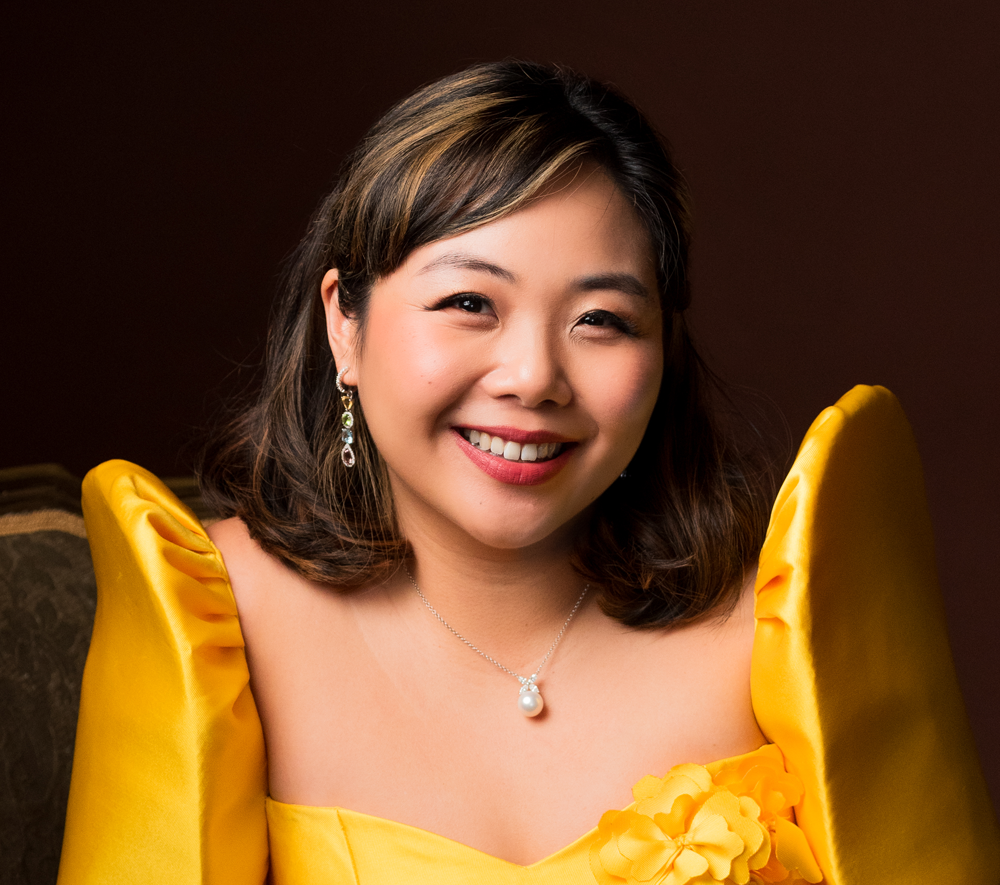
Michelle Mariposa, mezzo-soprano
Michelle Mariposa is an award winning Filipino-Chinese mezzo-soprano, praised for her “plummy tone, easy resonance, and effortless carrying power” (The New York Times). She is a Grand Finals winner of the Metropolitan Opera’s 2025 Eric and Dominique Laffont Competition, the first-prize winner of the 2026 Washington International Voice Competition, and a winner of The Sullivan Foundation’s 2023 Sullivan Award. Most recently, Mariposa was a Cafritz Young Artist with the Washington National Opera (WNO). She will return to WNO as Suzuki in Puccini’s Madama Butterfly and make her Seattle Opera debut as the second Frida Image in El Último Sueño de Frida y Diego by Pulitzer Prize–winning composer and playwright Gabriel Lena Frank and Nilo Cruz.
Additional roles and engagements have included Dorabella in the Glimmerglass Festival’s Così fan tutte; the title role in a concert performance of Carmen with the Manila Symphony Orchestra; Prince Orlofsky in Die Fledermaus with the Washington Opera Society; Marcellina in Le nozze di Figaro, The Fox and the Rose in The Little Prince, and Rebecca Nurse in The Crucible, among others, with WNO. She was a Young Artist with the Chicago Opera Theater, Chicago College of Performing Arts, Santa Fe Opera, and Teatro Nuovo, and she recently made her debut with the National Symphony Orchestra under Maestro Gianandrea Noseda.
Edward Graves, tenor
A graduate of the Merola Program and Adler Fellowship at San Francisco Opera, Edward Graves was a winner of the Metropolitan Opera’s 2022 Laffont Competition in the San Francisco District and a recipient of the Richard F. Gold Career Grant from the Shoshana Foundation in 2023. His 2026–27 season engagements include Macduff in Verdi’s Macbeth (Opera Colorado), the tenor soloist in Handel’s Messiah (Portland Baroque Orchestra), Don José in Carmen (Greenville Symphony), his first Verdi Messa da Requiem (Bucks County Choral Society), and Rodolfo in La bohème (Opera Idaho).
In 2025, Graves’s performances included Pinkerton in Madama Butterfly (Anchorage Opera), Duke of Mantua in Rigoletto (Savannah Voice Festival), and Robbins in Porgy and Bess (Houston Grand Opera). He earned critical acclaim as Anatol in Barber’s Vanessa at the 2023 Spoleto Festival USA, and his appearance in the Merola Opera Program’s What the Heart Desires earned a San Francisco Chronicle rave for his “superbly bright, clarion sound.” He holds a bachelor of music in voice performance from Towson University and both a performer diploma and master of music in voice performance from Indiana University’s Jacobs School of Music.
Daniel Klein, bass-baritone
Daniel Klein has been hailed by The New York Times for his “stentorian bass-baritone” and “dark and steely voice.” He made his Seattle Opera debut as Judge Moriarty and Stanley in Huang Ruo’s Bound in 2023, and recently appeared as Prospero in Joseph Summer’s The Tempest with Teatro Grattacielo, marking his third collaboration with the company. Additional appearances include Daniel Asia’s The Tin Angel and Nicolas Flagello’s Beyond the Horizon, Colline in La bohème with El Paso Opera, Simone in Zemlinsky’s Eine florentinische Tragödie with the little OPERA theatre of new york at the Brooklyn Academy of Music, Tonio in Pagliacci with the New Jersey Festival Orchestra, the Commentator in Scalia/Ginsburg with Opera Company of Middlebury, Frank Maurrant in Street Scene with the Aaron Copland School of Music at Queens College, and concert performances of excerpts from Le nozze di Figaro and Candide with the New West Symphony.
Klein has performed a wide range of contemporary opera alongside standard repertoire, including the title role in Gianni Schicchi with New Jersey Festival Orchestra and Opera on the James, and Ted and Dewey in Rob Handel and Eric Moe’s Artwork of the Future with Fresh Squeezed Opera. Upcoming engagements include the world premiere of Plague Mass with Counter Codex in New York City, where he creates the role of Ronald Reagan.